From frustrating users to working solution in 1 week
Designing smart energy features under real-world constraints - how Futurehome's EV charger integration with StrømKontroll went from frustrating users to earning their trust, delivered in one week.
Company
Futurehome
Role
Product Designer
Team
2 designers, 1 PM, 2 devs
Year
2024
Business Context
Futurehome launched their own EV charger and integrated it with StrømKontroll - an energy management system built for Norwegian households. EV chargers are the highest energy consumers in Norwegian homes and directly inflate electricity bills if not managed smartly. A charger working natively with the energy system was, in theory, a strong product-market fit
Problem
Waking up to uncharged cars
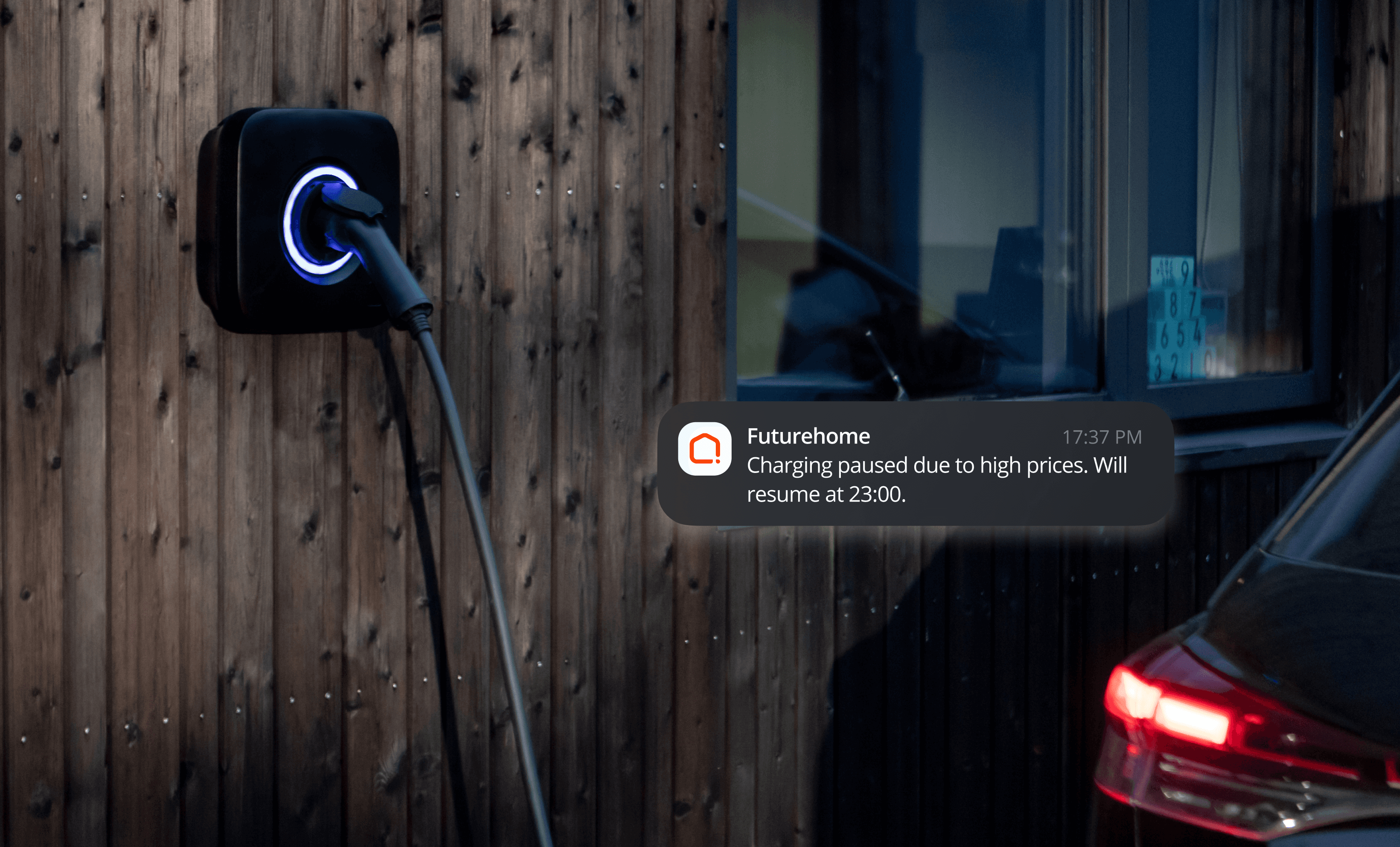
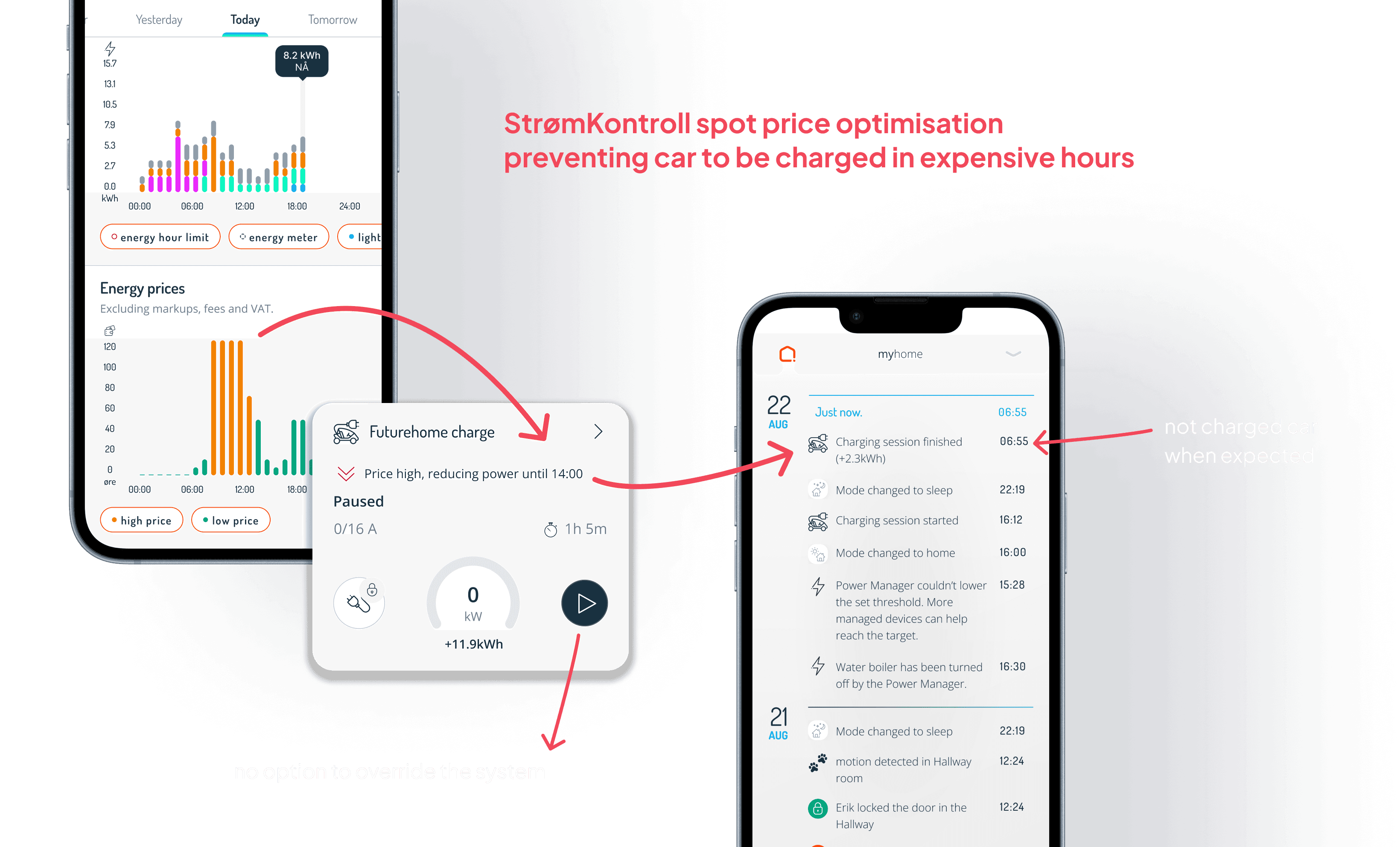
After launch, users reported waking up to uncharged cars, unable to drive to work or drop kids to school. The StrømKontroll spot price optimisation was preventing charging during "expensive" hours, creating long streaks (often 6+ hours) where charging was blocked. Users didn't understand why, they couldn't override it and as a result, many were stopping use of the system entirely.
The system had to be reliable
Users shouldn't worry whether they wake up to uncharged car again.
The system had to be easy to understand
Users shouldn't spend much time on understanding how the system works and why their car is not charging at the moment.
The system had to be easy to control
Users should be able to easily override system's functionality if needed.
My Role
Scope
End-to-end design ownership of the smart charging schedule feature from problem definition through to shipped product, including user flows, UI design, and beta feedback integration.
Collaboration
Partnered with another product designer, product owner, product manager, front-end developer, and back-end developer. Ran morning workshops, facilitated brainstorming sessions, and presented solutions for stakeholder sign-off.
Timeline
Problem defined, designed, built, and released to production within one week, a lean, fast-moving process with minimal overhead.
Influence
Shaped the direction of the solution by pivoting from a complex scheduling concept to a technically feasible, user-centred alternative.
Decision
A simple scheduler that guarantees your car is charged by departure time.
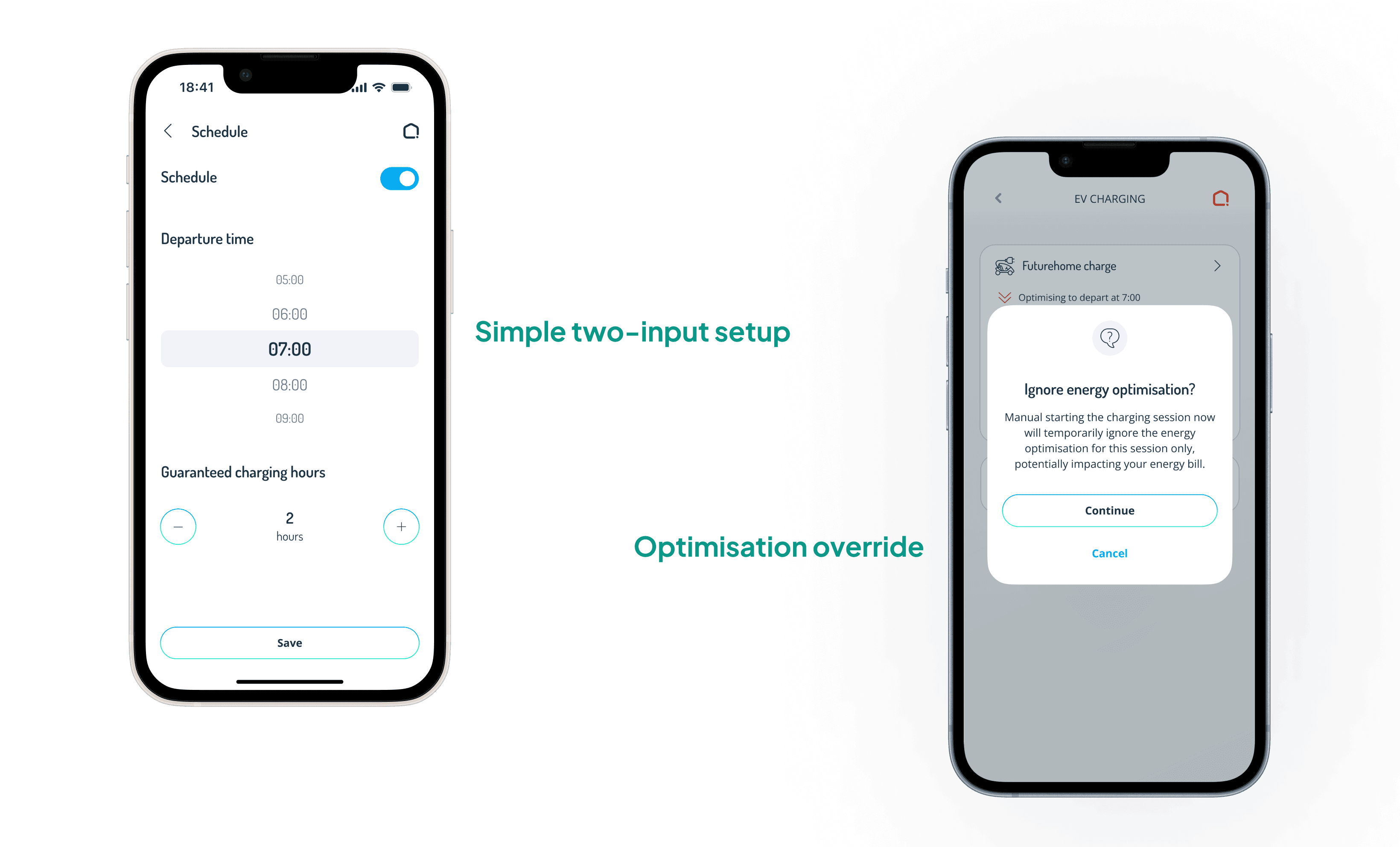
After initial concept validation revealed we lacked EV battery data, we pivoted to a leaner approach: users set a departure time and number of guaranteed charging hours. The algorithm then selects the cheapest hours within that window - overriding the standard cheap/expensive split when needed to ensure the car is ready.
This direction balanced user needs with technical reality: no new data infrastructure required, no complex UI, and fully compatible with the existing StrømKøntroll price optimisation algorithm.
Impact
Time to ship
From problem definition to production release - a lean, fast-moving process with minimal overhead.
Support ticket
Support load dropped significantly post-launch as the core pain point was resolved.
Beta feedback
Positive beta user feedback gave the team confidence to push to full production.
Final solution
Smart charging schedule live in the app
Before
StrømKontroll split 24 hours into ~50% cheap / ~50% expensive based on Nordpool spot prices. Charging was blocked during expensive streaks: often 6+ hours — leaving users with uncharged cars and no explanation.
No user control over charging windows
No visibility into when charging would occur
Algoirthm prioritised cost over user need
After
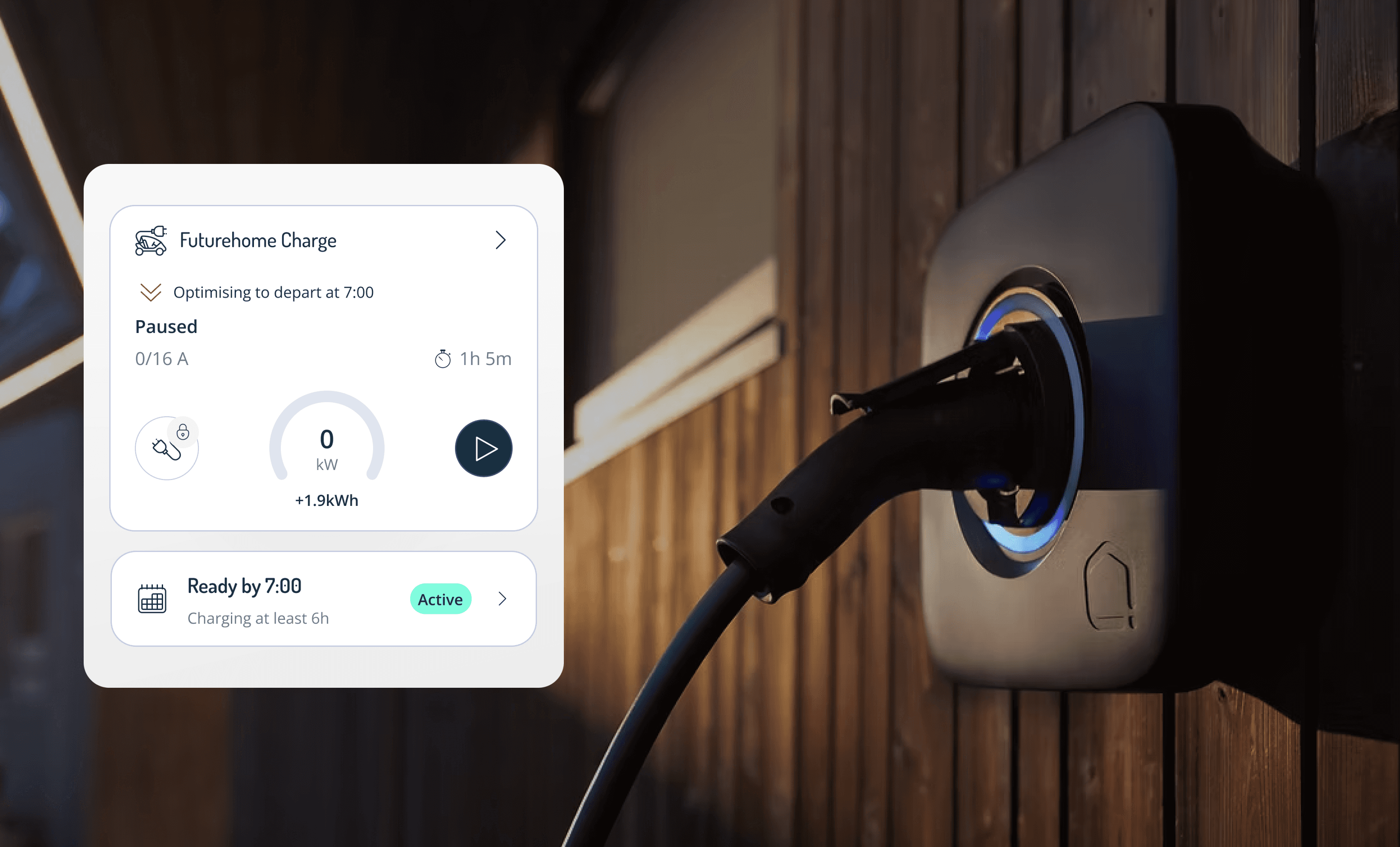
Users set a departure time (e.g. 7:00 am) and guaranteed charging hours (e.g. 6h). The algorithm selects the cheapest 6 hours between session start and departure - guaranteeing the car is ready.
Simple two-input setup
Overrides price optimisation when needed
Notifications informing in real-time what is happening with che charging session
Shipped to beta, validated, then pushed to production
Learnings
It doesn't always need to be a perfect solution — but the one that is actually working and solving the user problem.
Understand constraints earlier
If I could do one thing differently: involve the back-end developer at the very start of ideation. Understanding technical limits earlier would have accelerated the process even further.
Complexity should be invisible
Smart energy is inherently complex - multiple devices, real-time grid data, dynamic pricing. The design win was making all of that feel simple enough for anyone to use.